
Balloon Sinuplasty vs. Traditional Sinus Surgery
When sinus symptoms keep coming back, many patients reach a point where medications, nasal sprays, and rinses no longer seem to do enough. At that stage, the discussion may shift from symptom control to procedural treatment. Two options that often come up are balloon sinuplasty and traditional sinus surgery. While both are used to improve sinus drainage, they are not interchangeable, and they are not meant for exactly the same type of sinus problem. Chronic sinus inflammation is generally considered long-term when symptoms last 12 weeks or more, and it can affect sleep, breathing, comfort, and daily routine.
The most helpful way to compare these procedures is not by asking which one sounds easier. The better question is which one matches the underlying cause of the problem. Some patients mainly need blocked sinus openings widened. Others may have tissue swelling, polyps, scar tissue, or anatomy that calls for a more involved procedure. The right choice depends on what is happening inside the nose and sinuses, not just how severe the symptoms feel.
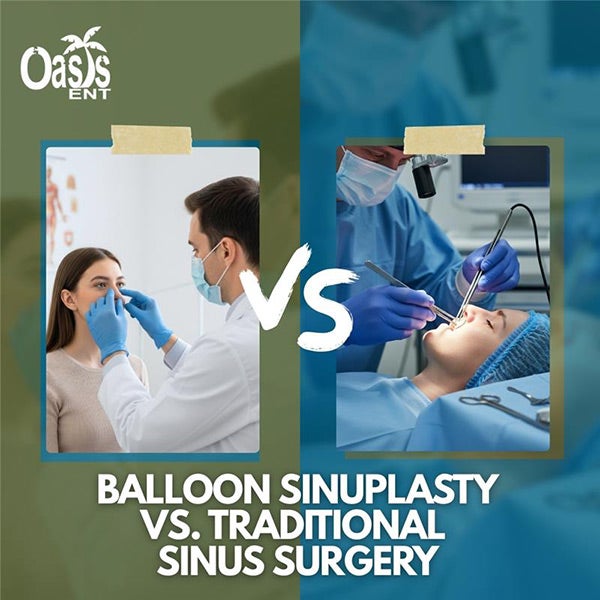
What Balloon Sinuplasty Is
Balloon sinuplasty is a procedure that uses a small balloon catheter to widen blocked sinus openings. Instead of cutting out tissue in the usual sense, the goal is to gently expand the drainage pathway so the sinus can ventilate and drain more normally. In selected cases, this may be done in an office setting, which is one reason many patients are interested in it.
For the right patient, balloon sinuplasty can be a useful treatment option. But it is not automatically the best fit just because it sounds less invasive. Its role depends on the patient’s anatomy, imaging findings, and the type of sinus disease present. It is best thought of as one tool among several, rather than a universal replacement for other sinus procedures.
What Traditional Sinus Surgery Is
Traditional sinus surgery is usually performed endoscopically through the nose. This approach allows the surgeon to directly treat blockage inside the sinus passages. Unlike balloon dilation alone, it can involve removing tissue such as inflamed mucosa, polyps, scar tissue, or other obstructing material when needed. The aim is to relieve obstruction and restore normal sinus ventilation and drainage.
This type of surgery may be more appropriate when the sinus disease is more extensive or when simply widening an opening is not enough to address the problem. It can also offer more direct access in cases where the surgeon needs to correct structural issues or deal with disease that cannot be managed with dilation alone.
The Core Difference
The main difference between balloon sinuplasty and traditional sinus surgery is how each procedure treats the sinus problem.
Balloon sinuplasty focuses on widening sinus openings.
Traditional sinus surgery can both widen those pathways and directly treat obstructing tissue or more involved disease.
That difference matters because not all sinus symptoms come from the same source. Two patients may both describe pressure, congestion, and recurring infections, yet one may be a reasonable candidate for balloon dilation while the other may need a more detailed endoscopic procedure.
Recovery Matters, But It Is Not the Whole Decision
A lot of patients understandably focus on recovery time when comparing procedures. A treatment that seems less invasive can feel more appealing, especially if someone is worried about downtime or discomfort. But recovery should not be the only point of comparison.
A procedure still has to fit the disease being treated. A shorter recovery does not help much if the procedure does not properly address the cause of the symptoms. That is why a careful evaluation usually matters more than general claims about which treatment is easier or quicker.
When Balloon Sinuplasty May Be Considered
Balloon sinuplasty may be considered when the problem is centered on blocked sinus openings that can be effectively dilated and when there is no need to remove tissue as part of treatment. It may also be considered in patients who are looking for an option that can sometimes be done under local anesthesia.
Still, not every patient with sinus pressure or chronic congestion is automatically a balloon candidate. Imaging and exam findings matter. In general, sinus disease should be confirmed before balloon dilation is performed.
When Traditional Sinus Surgery May Make More Sense
Traditional sinus surgery may make more sense when the disease is more extensive, when there are structural issues inside the nose, or when tissue needs to be removed to create a better result. It may also be the better fit when direct visualization and more detailed correction are needed.
Although this option may sound more involved at first, it can be the more appropriate path when a simpler procedure would not fully address the problem. The goal is not to choose the lightest procedure on paper. It is to choose the one that best matches the patient’s actual sinus condition.
Questions Worth Asking at Your Visit
If you are comparing balloon sinuplasty and traditional sinus surgery, it may help to ask:
- What is causing my sinus symptoms?
- Do my exam findings or scans show a simple blockage or something more involved?
- Have I already tried enough medical treatment?
- Would treatment involve widening an opening only, or also removing tissue?
- Which option fits my anatomy and the pattern of my sinus disease?
These questions often lead to a more useful discussion than simply asking which procedure is newer or less invasive.
The Most Appropriate Procedure Depends on the Diagnosis
Balloon sinuplasty and traditional sinus surgery both have a role in sinus care, but neither is a one-size-fits-all solution. What matters most is an accurate diagnosis, a clear understanding of what is causing the symptoms, and a treatment plan that matches the findings. When that process comes first, patients may be better positioned to make informed decisions about next steps.
When It May Be Time to See an ENT
If sinus symptoms have been lingering for weeks or keep returning, it may be time for a closer evaluation. Oasis ENT can assess what may be causing the problem and discuss whether balloon sinuplasty, traditional sinus surgery, or another treatment approach may be more appropriate for your situation.
If sinus symptoms have been lingering, returning often, or becoming harder to manage, a closer evaluation with Oasis ENT may help clarify what is going on and what treatment options may be appropriate for you. Give us a call today and schedule your first consultation!
The information provided in this article is for informational and educational purposes only and does not constitute medical advice. It is not intended to diagnose, treat, cure, or prevent any disease or medical condition. Always seek the guidance of your physician or other qualified healthcare provider with any questions you may have regarding a medical condition or treatment.
Results may vary: Treatment outcomes and health experiences may differ based on individual medical history, condition severity, and response to care.
Emergency Notice: If you are experiencing a medical emergency, call 911 or seek immediate medical attention.

The holidays in Surprise, Arizona bring cooler air, family gatherings, and festive decorations — but they can also bring sniffles, congestion, and…

The holiday season is one of the busiest travel periods of the year. Whether you’re planning to explore somewhere new or heading home to visit family…